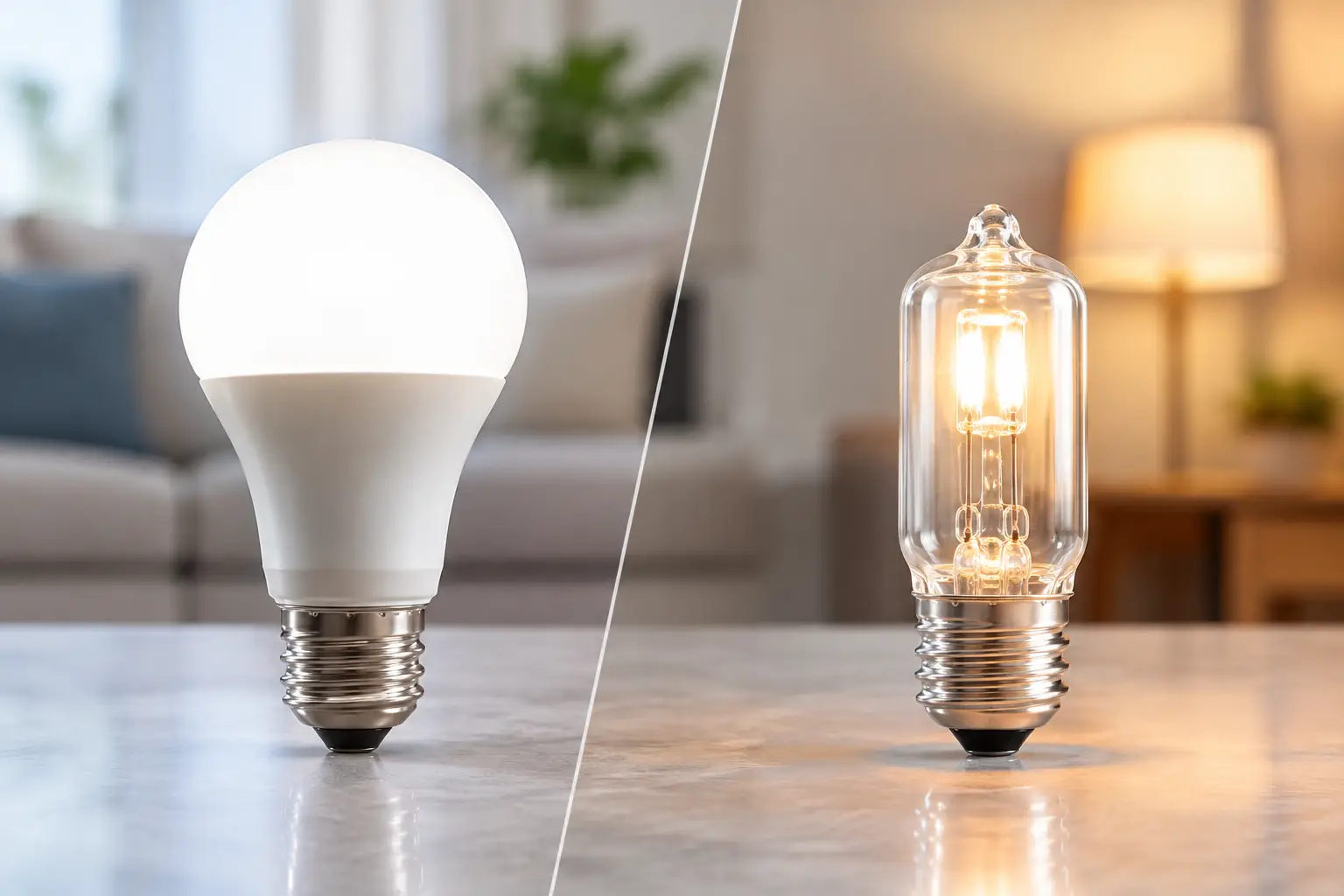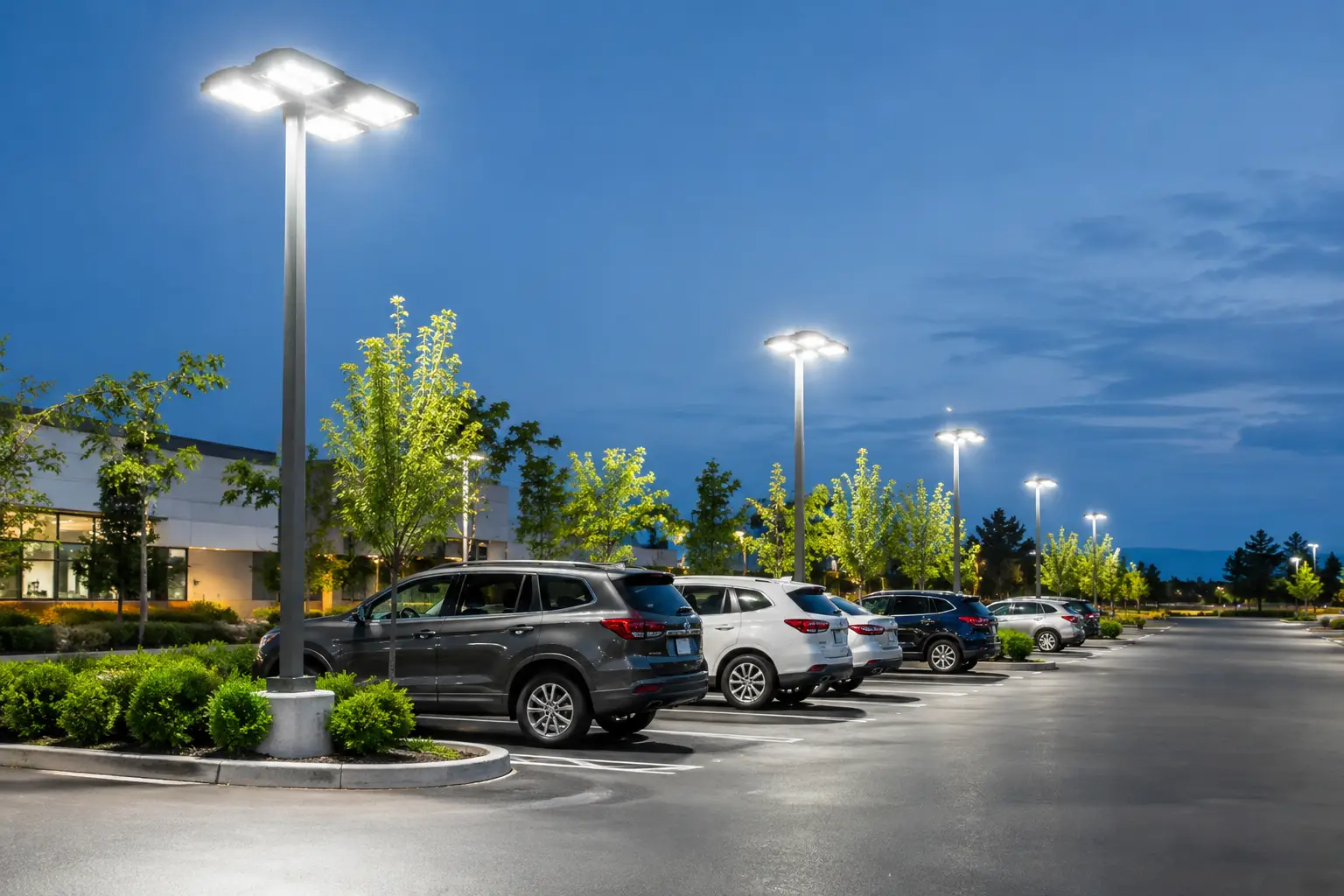
A warehouse rarely gets the luxury of stopping work because the lights need attention. That is why this warehouse LED retrofit case study focuses on more than lower energy use. It shows how a considered lighting upgrade can improve visibility at picking benches, reduce disruption from failed fittings and give site managers a clearer view of operating costs.
The project below is a representative example based on the issues commonly found in established warehouses. Every building is different, so final fitting selection, light levels and savings should always be confirmed through a site inspection, lighting plan and electrical assessment.
The warehouse LED retrofit case study
The facility was a medium-sized warehouse with high-bay storage, dispatch lanes, a packing area and a small office zone. The warehouse operated six days a week, with early starts and occasional late dispatches. Its existing lighting consisted mainly of older metal-halide high bays, fluorescent fittings over workstations and separate emergency lighting.
The lighting had become a daily frustration rather than a background service. Some high bays took time to reach full brightness, while others produced uneven light across racking aisles. Staff working at benches reported shadows over labels and packing slips. The maintenance team was also replacing lamps and control gear regularly, often needing access equipment to reach fittings above storage areas.
For the site manager, the problem was not simply that the lights were old. It was that lighting was affecting safety, productivity and the ability to keep the warehouse moving without interruption.
What the assessment found
A proper retrofit starts with the site, not a catalogue of fittings. The electrical assessment considered ceiling height, racking layout, task areas, existing circuit capacity, switching arrangements and the condition of the current fittings. The team also looked at where forklifts travelled, where people picked stock, and which zones remained active after the main shift finished.
In this case, the existing high bays delivered a patchy result. Bright spots directly beneath fittings sat beside noticeably darker areas between aisles. Some lamps had shifted in colour over time, making it harder for staff to read printed labels consistently. The older system also used more power than necessary and created ongoing maintenance work.
Measurements and a lighting layout were used to establish practical targets for each area. A high-rack storage aisle does not need to be lit exactly like a detailed packing bench, and loading zones may need a different approach again. Designing every part of a warehouse to the same level can waste energy without improving the working environment.
The assessment also reviewed emergency and exit lighting separately. General LED lighting may improve normal visibility, but it does not replace the need for compliant emergency lighting arrangements where required.
The retrofit plan
The recommended solution replaced the ageing high-bay fittings with LED high bays selected for the building height and aisle layout. Linear LED fittings were specified for the packing and office-adjacent areas, where a more even spread of light suited close work. The design aimed to reduce glare as well as improve brightness, because excessive glare can be just as distracting as insufficient light.
The upgrade was divided into zones. Storage aisles, dispatch, packing, amenities and office areas could be controlled according to how the facility was used. In lower-traffic spaces, occupancy sensors and timers were considered to avoid lighting empty areas for a full shift. In continuously active zones, straightforward switching was retained so staff could operate the system without confusion.
This balance matters. Controls can reduce unnecessary energy use, but overly aggressive sensor settings can leave people waiting for lights to react or cause distractions in areas with intermittent movement. The right approach depends on the work being performed, the number of staff on site and the normal operating hours.
Installation planning was equally important. The work was staged around warehouse activity, with individual sections isolated and completed while other areas remained operational. Access equipment, stock locations and forklift movement were coordinated before work began. This reduced the need for last-minute changes and helped keep staff out of work zones during installation.
Why fitting quality mattered
Cheap fittings can look attractive on a quote, particularly when a warehouse requires dozens of units. However, the long-term cost of a failed high-bay fitting is more than the price of a replacement. It may involve elevated work platforms, access restrictions, downtime near racking and disruption to staff.
For this project, fitting reliability, warranty coverage, thermal performance and ease of future maintenance were considered alongside upfront cost. Drivers and connection points were selected with serviceability in mind. The result was a system designed for the practical reality of a working warehouse, not just for a favourable initial price.
Results after installation
Once commissioned, the upgraded warehouse had a more even light distribution across key work areas. Staff could see labels, pallet positions and floor markings more clearly, particularly at the ends of aisles where the old lighting had created dark patches. The cleaner white light also improved visual comfort in the packing area during long shifts.
The facility expected lower electricity consumption from lighting because LED fittings produced the required illumination with less power than the previous metal-halide and fluorescent equipment. Actual savings depend on operating hours, tariff structure, existing wattage, control settings and how closely the installed layout follows the design. A site-specific estimate is far more useful than a broad percentage claim.
Maintenance demands were expected to fall as well. LED fittings typically have longer operating lives than many older lamp-based systems, reducing the frequency of relamping and ballast-related faults. That does not mean LED lighting is maintenance-free. Fittings still need periodic inspection, cleaning where dust accumulates, and prompt attention if drivers, controls or emergency circuits develop faults.
The operational benefit was just as meaningful as the energy benefit. With fewer lighting complaints and less need to arrange reactive repairs at height, the site manager could focus on dispatch schedules and facility maintenance rather than replacing failed lamps.
Lessons for warehouse owners and managers
The main lesson from this warehouse LED retrofit case study is that a lighting upgrade should be treated as an operational project, not a simple product swap. Choosing a higher wattage fitting because it sounds brighter can lead to glare, wasted power and poor uniformity. Choosing the lowest-cost fitting can create avoidable maintenance issues later.
A better starting point is to understand where people work, what they need to see and when each part of the building is occupied. Racking changes, new packing lines and altered forklift routes can all affect lighting requirements. If the warehouse has changed since the current lights were installed, the old layout is unlikely to be the best guide for the new one.
It is also worth checking the supporting electrical infrastructure. Older switchboards, overloaded circuits, damaged wiring or inadequate controls may need attention before or during a lighting upgrade. Addressing these issues early provides a safer foundation and avoids compromising a new installation with ageing electrical equipment.
For businesses considering solar, battery storage, EV charging or security upgrades, lighting can be part of a broader electrical plan. Reducing avoidable lighting load may help clarify future power requirements, while improved illumination can support clearer CCTV coverage around dispatch areas and entries.
Planning a retrofit with confidence
Before approving a warehouse lighting upgrade, ask for a site-specific proposal that explains the fitting layout, intended light levels, control approach, installation staging and warranty arrangements. It should also identify any switchboard, circuit or emergency-lighting work that may be required. Clear scope details make it easier to compare quotes fairly and avoid surprises once work begins.
A licensed electrician can assess the facility, design a practical solution and complete the installation with safety and minimal disruption in mind. For warehouse managers, the best outcome is simple: lighting that helps people work safely and accurately, while demanding far less attention after the job is done.